
Italy, Without The Performance Or Stress
Italy
Not a guide to Italy, but a shift in how life is experienced.
━20.4.2026
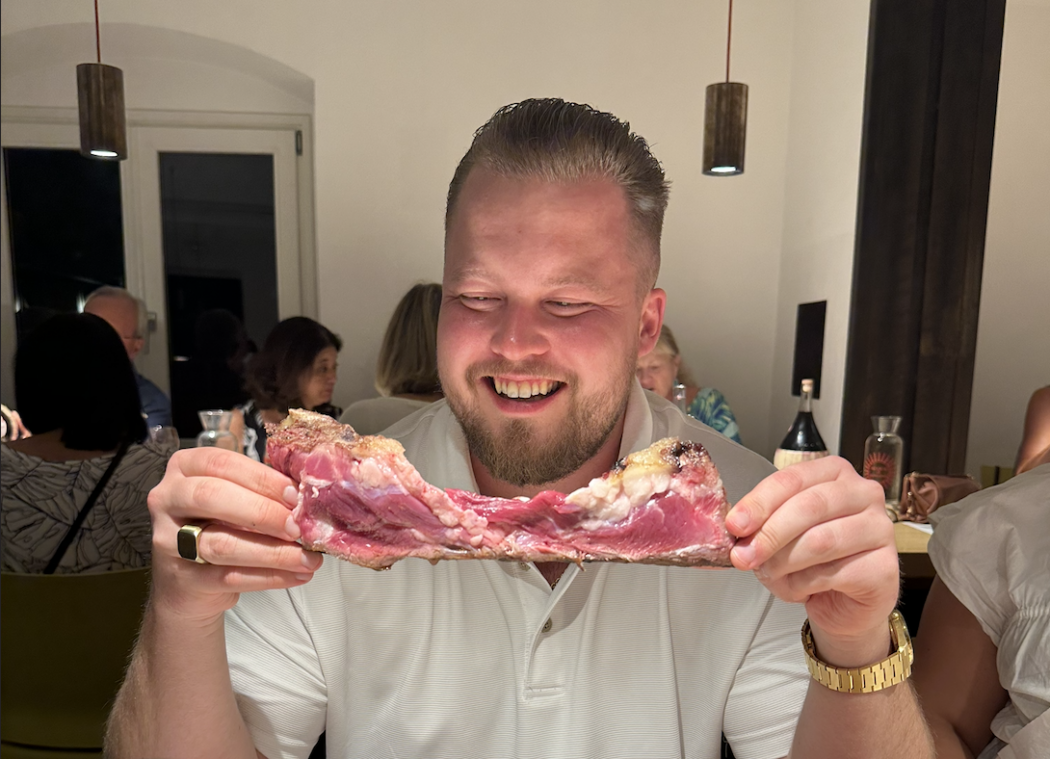
In Panzano, meat is not just cooked — it’s honored. An experience shaped by Dario Cecchini, where tradition, fire, and personality meet at the same table.
A Manifesto for Travelers Who Want to Feel, Not Just See
Some countries impress you.
Italy rearranges you.
Not through spectacle. Not through luxury. Not through the “top 10 things to do.” But through something quieter and more powerful: rhythm.
Italy feels like a culture that decided — collectively — that life is not a race you win by finishing first. It’s something you taste while it’s still warm.
The First Italy Effect: Time Becomes a Texture
I don’t mean this poetically — I mean it physically.
In Italy, I feel my shoulders drop without permission. Meals stretch. Coffee becomes a pause instead of a tool. Walking becomes normal again. The body stops acting like it’s late for something that doesn’t matter.
It’s not “slow” as in lazy.
It’s slow as in deliberate.
As in: correct.
There’s more space between moments. And that space changes everything.
Food Here Is Not Entertainment. It’s Identity.
Italian food isn’t obsessed with being new. It’s obsessed with being right.
That obsession shows in the rules people joke about — and still follow. You don’t just freestyle a recipe because you found something in the fridge. Some dishes carry history like a family name. You respect it, or you don’t make it.
And that discipline creates pleasure.
Because when the ingredients are good, you don’t need tricks.
Salt. Olive oil. Heat. Time.
A tomato can taste like a revelation.
Cheese can feel like philosophy.
Wine can smell like a landscape.
This is why Italy is dangerous for food lovers: it raises your baseline.
Why It Feels Like Italians Have More Hours in Their Day
Because their day isn’t built around constant interruption.
In many cultures, the default is fragmentation: calls, notifications, “quick tasks,” rushed meals, half-listening conversations. In Italy, the default feels more continuous. You do one thing, then the next. Meals are not multitasked.
Even if you spend only a short time here, your mind notices the difference. And when you go back home, your nervous system misses it.
Pleasure Isn’t Excess — It’s Attention
Italy taught me something that sounds simple until you actually practice it:
Pleasure is noticing.
The crunch of gravel in a garden.
The smell of cured ham.
The way olive oil catches light.
The hum of conversation in a trattoria.
Most people chase pleasure like it’s a prize. Italy treats pleasure like it’s a skill.
And that’s the real souvenir: the ability to feel your life while you’re in it.
A Travel Philosophy You Can Take Home
You don’t need to move to Italy. You don’t need to become a wine expert. You don’t need a bigger budget.
Try this instead:
- Cook one meal slowly each week.
- Buy fewer ingredients — better ones.
- Walk daily, without headphones sometimes.
- Put your phone away during meals.
- Eat with people you actually like.
- Let a good moment last longer than necessary.
Life expands when you stop compressing it.
Italy isn’t perfect. It can be loud, chaotic, crowded. But underneath that, there’s coherence — a cultural agreement that food matters, time matters, presence matters.
And that’s why it stays with you.
____________
Samuli Makkonen — Pleasure Advisor
Live with more pleasure.
Follow the journey:
Instagram @pleasureadvisorworld
TikTok @pleasureadvisorworld
YouTube Pleasure Advisor
